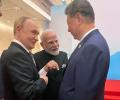
'Personalities are temporary, policies provide for stability.' 'With the former, when personalities change so does the nature of the relationship.' 'Policies and structures, on the other hand, are idiot-proof, as well as maverick-resistant,' explains Saisuresh Sivaswamy.

The ministry of external affairs on Friday dismissed as 'fake news' reports alleging that India had requested Israel to sign a defence pact in response to the newly formed Pakistan-Saudi Arabia-Turkey security framework.

Japan is deepening its defence relationship with India while simultaneously expanding its economic, infrastructure and security engagement with countries around India -- particularly Bangladesh. The result is an emerging Japanese conception of South Asia in which India remains the strategic anchor, but the geography surrounding India is becoming increasingly important, points out Varun Arya.

Arunachal Pradesh MP Tapir Gao underscores the critical importance of heeding local warnings regarding alleged Chinese incursions along the Line of Actual Control, amidst ongoing border tensions and official denials.

Europe has overtaken Asia as India's biggest arms supplier, reflecting New Delhi's evolving defence procurement strategy.

External Affairs Minister S Jaishankar has strongly defended India's decision to purchase Russian crude oil, stating that the country's energy choices are based on cost and availability, and highlighting the West's 'hypocrisy' in criticising India while historically supplying weapons used against it.

Over Rs 180 crore was incurred on Prime Minister Narendra Modi's visit to 23 countries including the US, the UK, France, China and Japan in 2025, according to data shared by the government.

Prime Minister Narendra Modi and NDA leaders reviewed India's progress in international sports and significant growth in youth employment opportunities at their weekly parliamentary meeting.

Bihar and Uttar Pradesh are on high alert following devastating flash floods in Nepal's Gandak river system, prompting emergency measures including evacuations and continuous monitoring by central and state authorities.

A central government committee has upheld the ban on the Diljit Dosanjh-starrer film Satluj, citing concerns over India's sovereignty and integrity, sparking political debate in Punjab.

US Secretary of State Marco Rubio arrived in Kolkata for a four-day diplomatic tour to India, marking the first visit by a US secretary of state to the city in 14 years. His itinerary includes meetings with Indian officials, energy talks, and a Quad Foreign Ministers Meeting.

Prime Minister Narendra Modi, Union ministers and leaders of the National Democratic Alliance allies on Tuesday attended the ruling coalition's weekly meeting of parliamentarians, where the absence of three Nationalist Citizens Party of India (NCPI) MPs stood out amid signs of differences within the 20-member group of Trinamool Congress rebels over its association with the alliance.

Operation Safed Sagar is prime purpose may be to honour IAF warriors but it is an inadvertent reminder of how we went from a nation of Jung na hone denge to Ghar mein ghus ke marenge, observes Sukanya Verma.

Prime Minister Narendra Modi on Thursday discussed with a group of senior ministers the prevailing global security situation and how to maintain supply chain uninterrupted despite conflicts in different zones, including the Strait of Hormuz, the Black Sea, the Red Sea, and the Gulf of Aden.

Terming protesters in Pakistan-occupied Kashmir (PoK) as "enemies" like India, Pakistan's Defence Minister Khawaja Asif has said there will be no dialogue with them, even as the death toll due to clashes between demonstrators and security personnel rose to 20 on Wednesday.

India has strongly condemned the recent terror attacks in Mali, including the death of the country's defence minister, and reiterated its commitment to combating terrorism.

External Affairs Minister S Jaishankar and US Secretary of State Marco Rubio discussed cooperation in trade, critical minerals, nuclear energy, and defence, reaffirming commitment to a free and open Indo-Pacific.

India has voiced deep concern over a drone attack targeting the Barakah nuclear facility in the United Arab Emirates (UAE), calling it a dangerous escalation in the West Asia conflict.
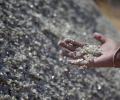
Hyderabad-based Midwest Ltd has become the first Indian private company to secure overseas critical mineral mines, sealing a deal with Indonesia's state-run PT Perusahaan Mineral Nasional (PERMINAS) to ensure a long-term supply of rare earths.

External Affairs Minister S Jaishankar has engaged in multiple conversations with his Iranian counterpart to secure safe passage for Indian merchant vessels through the Strait of Hormuz amidst escalating tensions in West Asia.

US Secretary of State Marco Rubio will visit India from May 23-26 to enhance cooperation in trade, defence, and energy, attending meetings with senior Indian officials and participating in a Quad group meeting in New Delhi.
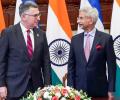
India and Israel on Tuesday signed a defence pact that will facilitate sharing of advanced technologies and promote co-development and co-production of key weapon systems and military hardware, in a major move to further bolster their already robust strategic ties.

Prime Minister Narendra Modi and US President Donald Trump are set to hold comprehensive talks focusing on a bilateral trade deal, defence cooperation, and energy and critical minerals sectors during the G7 summit in Evian-les-Bains, France.

Russian President Vladimir Putin has offered New Delhi Russia's fifth-generation stealth aircraft Sukhoi Su-57 and even suggested that the combat jet could even be jointly produced in India in line with the strong strategic partnership between the two countries.

'Why not aspire for 8 or 9 or even 10 per cent?'

The Indian government has issued an updated Standard Operating Procedure (SOP) for processing Foreign Direct Investment (FDI) applications, aiming to clear all proposals within 12 weeks, a two-week extension from the previous 10-week target, to ensure a fully paperless and transparent process.

For India, much is at stake: Crucial energy supplies traversing the Strait of Hormuz, the fate of its 10 million citizens living and working in West Asia -- who send generous remittances home -- and its major trade links with the region.

Prime Minister Narendra Modi and US President Donald Trump exchanged pleasantries and held a brief conversation at the G7 summit, their first in-person encounter in 16 months, setting the stage for high-stakes bilateral talks amidst continuing strain in India-US relations.
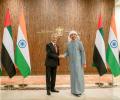
Frankly, was it really necessary in the middle of a fratricidal war for External Affairs Minister S Jaishankar to travel to Abu Dhabi for a one-on-one with the sheikh on April 12?Or, for National Security Advisor Ajit Doval to follow up on April 26? Or, for PM Narendra Modi to follow through today? There are no easy answers, notes Ambassador M K Bhadrakumar.

'We caught General Pervez Musharraf talking over the phone with his Chief of General Staff Lieutenant General Mohammad Aziz. Musharraf was visiting China; Aziz was in Rawalpindi.'

An innovation roadmap, a mechanism to double annual bilateral trade within next five years, and a joint artificial intelligence framework were among 13 outcomes to emerge from wide-ranging talks between Prime Minister Narendra Modi and President Emmanuel Macron on Sunday.

The visit was expected to project Assam as the gateway to Southeast Asia and reinforce the state's emergence as a preferred investment destination.

Prime Minister Narendra Modi's visit to Italy concluded with the elevation of India-Italy relations to a Special Strategic Partnership, focusing on enhanced cooperation across various sectors.

The Indian government informed Parliament that India and the US are engaged in negotiations for a mutually beneficial multi-sectoral bilateral trade agreement. The two countries also cooperate on strategic, economic, and defense matters, managing divergences through high-level dialogues.

Prime Minister Narendra Modi will visit Israel to enhance defence and trade cooperation amid Middle East tensions. Discussions will include defence, security, and the situation in Gaza.
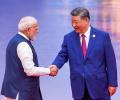
India's dual pursuit of a robust strategic partnership with Washington and a pragmatic, tension-management policy with Beijing represents the essence of modern multi-alignment. By embracing economic pragmatism, learning to compartmentalize political differences, and engaging in continuous dialogue, India can secure its borders, grow its economy, and contribute to a stable, multipolar Asian century, points out Ambassador Rajasekhar.

The two leaders also emphasised the importance of ensuring safe and free navigation through the Strait of Hormuz, the Ministry of External Affairs (MEA) said.

India has expressed its expectations for Saudi Arabia to consider 'mutual interests and sensitivities' in their bilateral strategic partnership, following Riyadh's strategic defence pact with Pakistan.

National Security Advisor Ajit Doval called for decisive action against terrorism and said there cannot be 'double standards' in the fight against it, while addressing an international security forum in Russia.
The Indian government has dismissed the US Commission on International Religious Freedom's (USCIRF) report on religious freedom in India, stating that it does not recognise the commission's authority to comment on the rights of Indian citizens.
